
Walnut Processing Plant for Efficient Walnut Shelling
A walnut processing plant helps you process large quantities of…
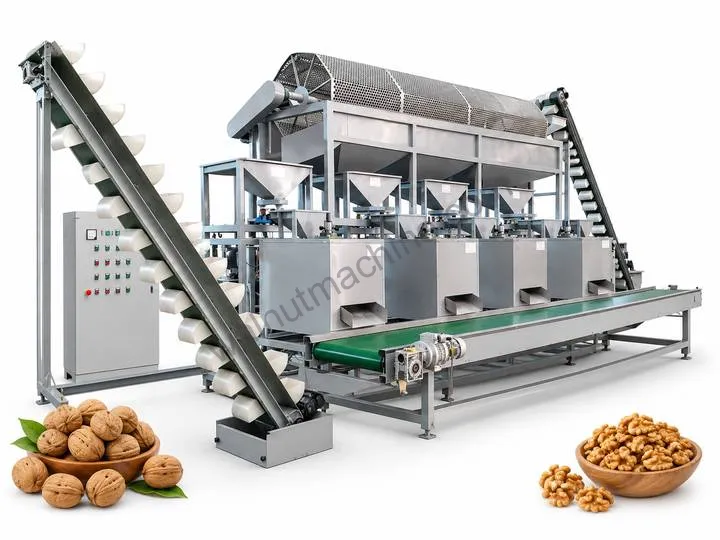
A walnut processing plant helps you process large quantities of walnuts through size grading, shelling, kernel-shell separation, and final sorting. We offer a multi-stage walnut shelling line designed for continuous material processing.
The equipment configuration can be adjusted according to walnut size, processing capacity, and kernel quality requirements. The number of shelling machines can also be increased or reduced to suit your project.
What Is a Walnut Processing Plant?
Our walnut processing unit for shelling combines several machines to separate walnut kernels from their hard shells. Rather than relying on a single walnut cracking machine, the complete system handles multiple processing stages.
The main functions include:
- Grading walnuts by size before shelling
- Feeding walnuts into shelling machines at a controlled rate
- Cracking the shells and separating kernels from shells
- Removing stones and residual shell fragments
- Sorting kernels and removing defective pieces
This configuration is suitable for walnut processors who need to handle bulk raw materials and organize multiple processing stages in one production system.
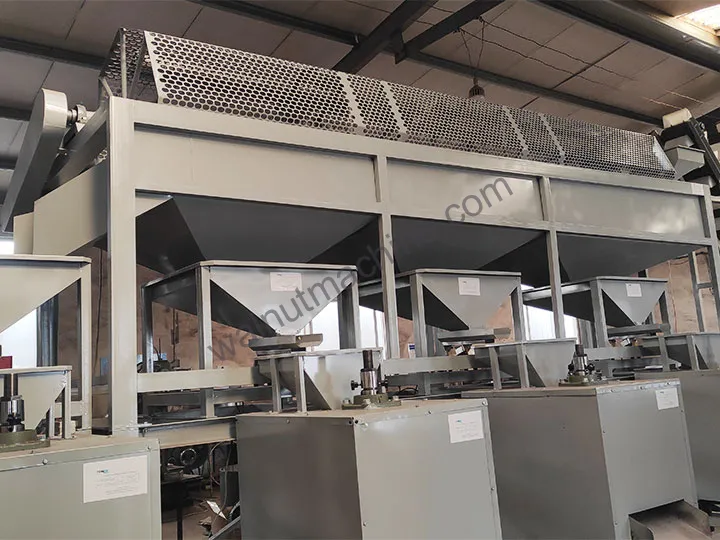
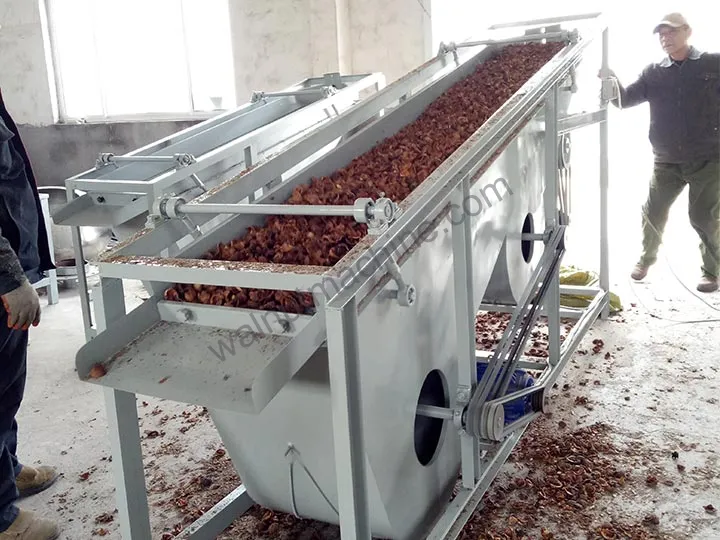
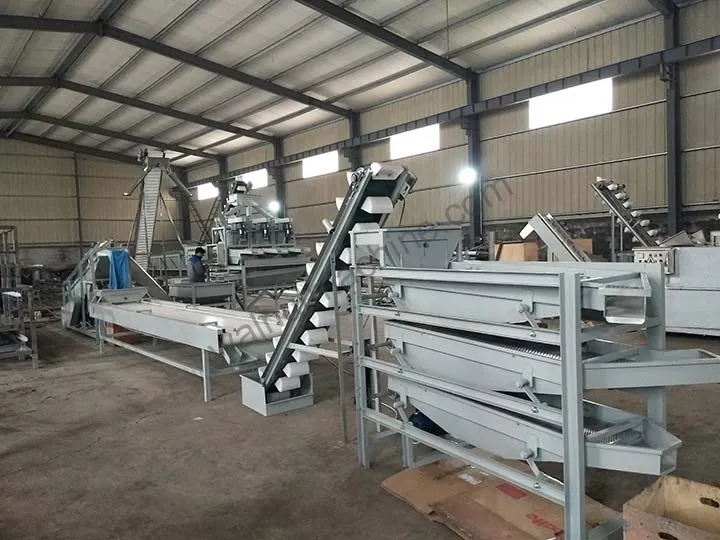
Walnut Shelling Line with a Capacity of 1–1.5 Tons per Hour
The machine configuration in this article is based on a processing capacity of 1–1.5 tons per hour. Of course, we can customize the solution according to each customer’s specific capacity requirements.
- Raw material elevator
- Rotary drum grading machine
- Electromagnetic quantitative feeding hoppers
- Multiple walnut shelling machines
- Kernel collecting conveyor
- Feeding elevator for the separation section
- Kernel-shell separators
- Gravity destoner
- Screening machine
- Final sorting conveyor
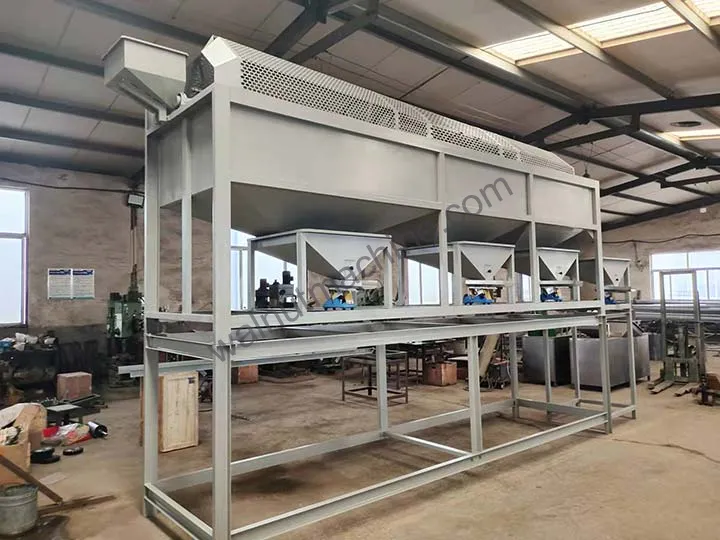
The rotary drum grading machine separates walnuts into different size grades. The graded materials are then fed into the corresponding shelling machines.
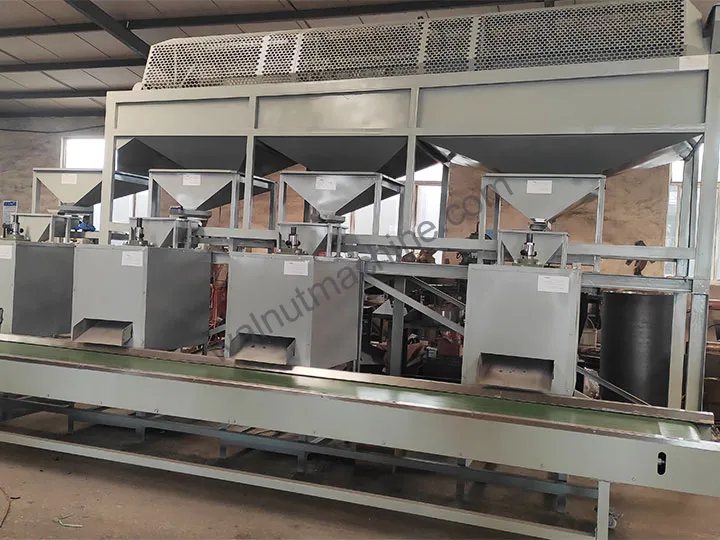
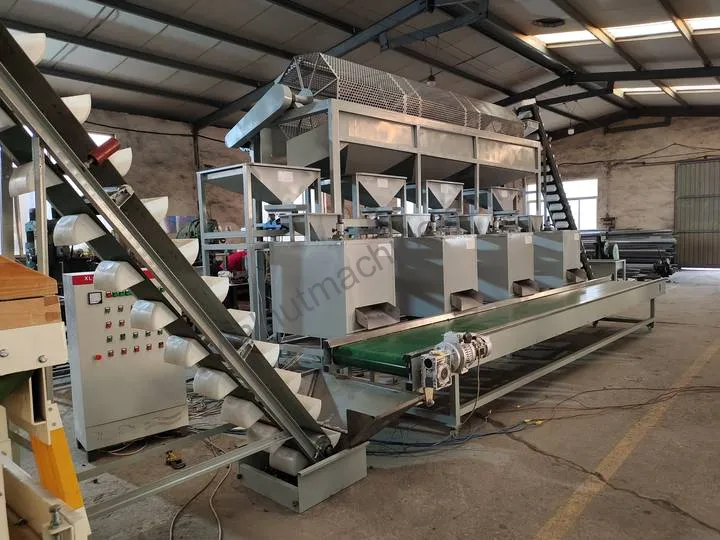
The number of walnut shelling machines is flexible. For example, a configuration with three or four shelling machines can be considered according to the required throughput, walnut size distribution, and shelling performance. The final configuration should be confirmed through material testing and equipment matching.
How Does the Walnut Processing Plant Work?
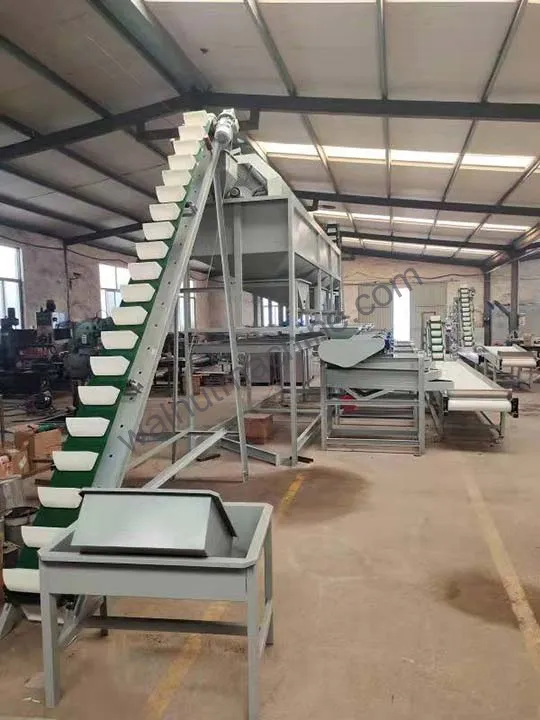
1. Raw Material Feeding and Size Grading
An elevator conveys the raw walnuts into a rotary drum grading machine. The machine separates walnuts into four size grades, helping prepare the raw material for the shelling stage.
2. Quantitative Feeding
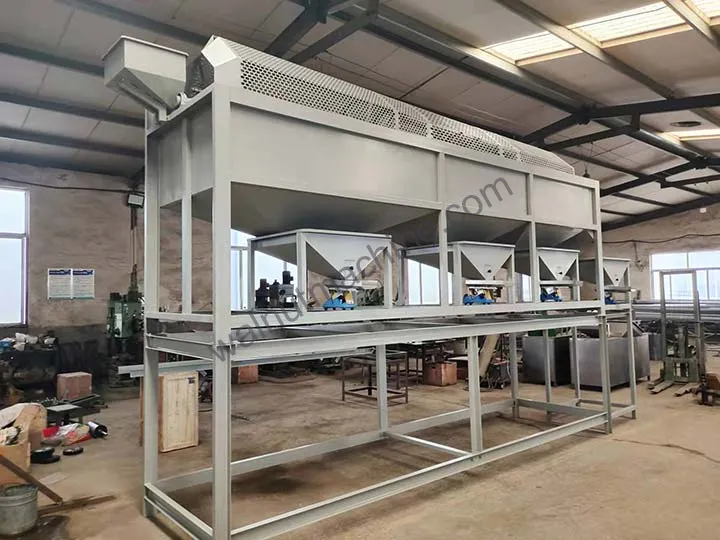
After grading, electromagnetic quantitative feeding hoppers deliver walnuts to the shelling machines.
This arrangement supports controlled feeding and allows different walnut sizes to enter the appropriate shelling units.
3. Walnut Shelling
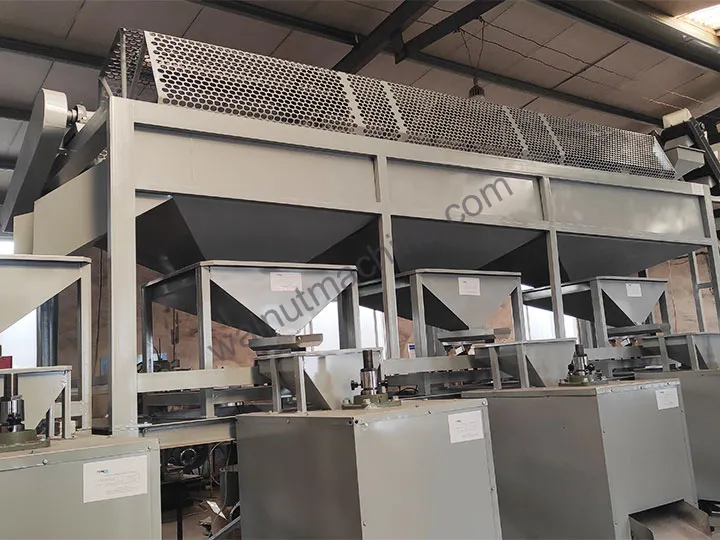
The walnut shelling machines crack the hard shells to release the kernels. Their shelling gaps can be adjusted according to walnut size to help balance shell removal and kernel integrity.
Depending on the project, we can match three, four, or another suitable number of walnut shelling machines to the required processing capacity.
4. Kernel and Shell Separation
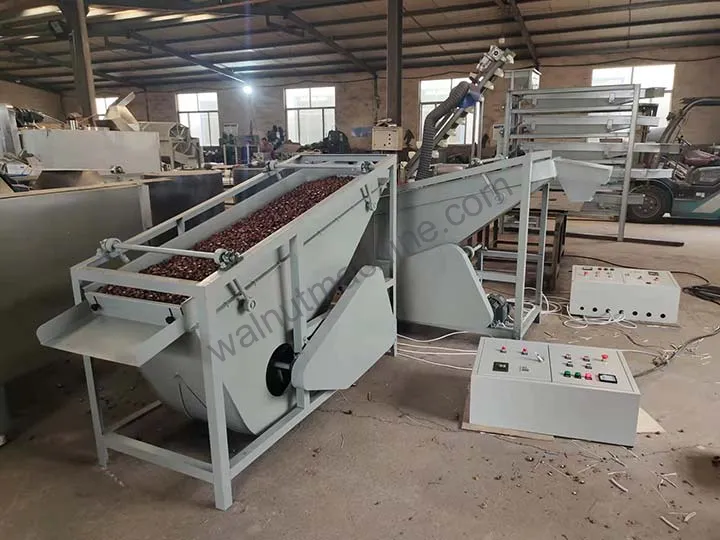
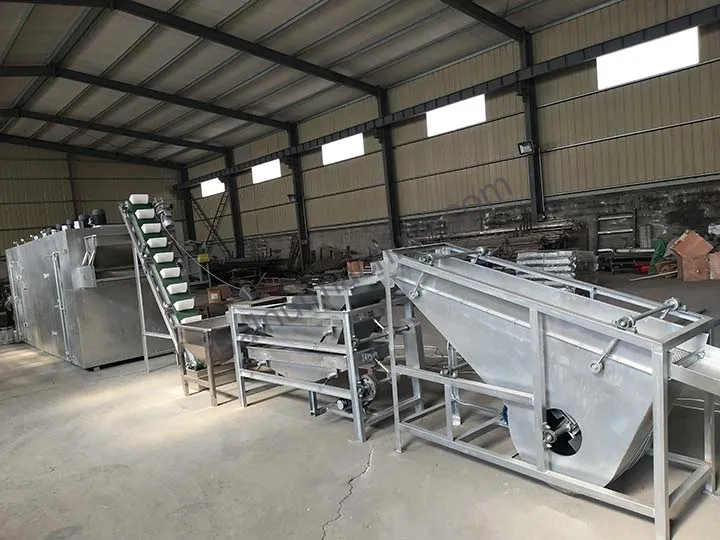
After shelling, the mixture of walnut kernels and shells is conveyed to the separation section.
The kernel-shell separators separate the two materials and discharge them through different outlets for collection.
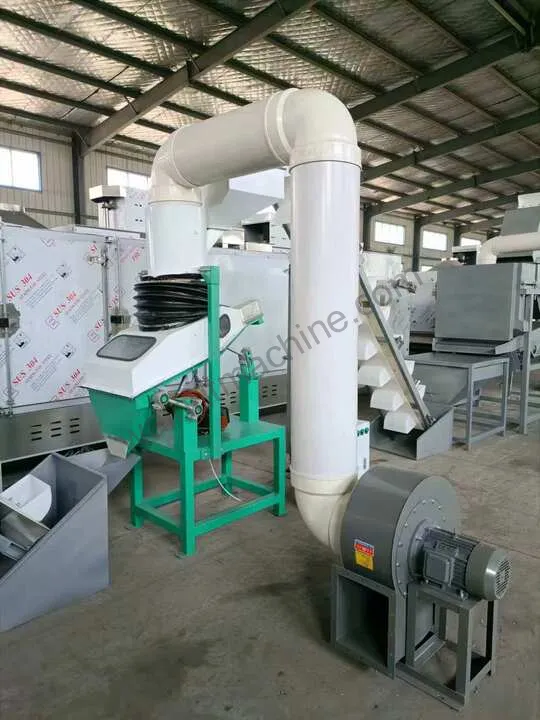
5. Stone Removal and Screening
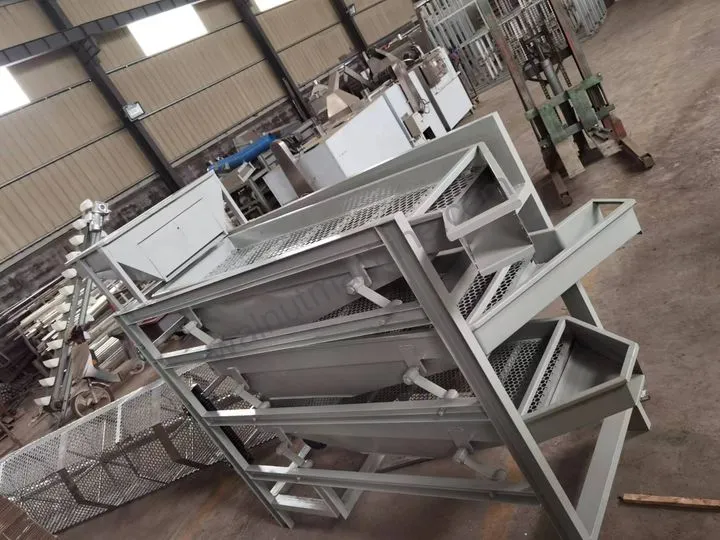
A gravity destoner removes stones and other heavy impurities from the processed material.
The material then passes through a screening machine to remove residual shell fragments and other small waste particles. These stages help prepare the walnut kernels for final sorting.
6. Final Kernel Sorting
A conveyor belt provides a working area for inspecting the separated kernels. Operators can remove defective or unsuitable pieces before the kernels are collected.
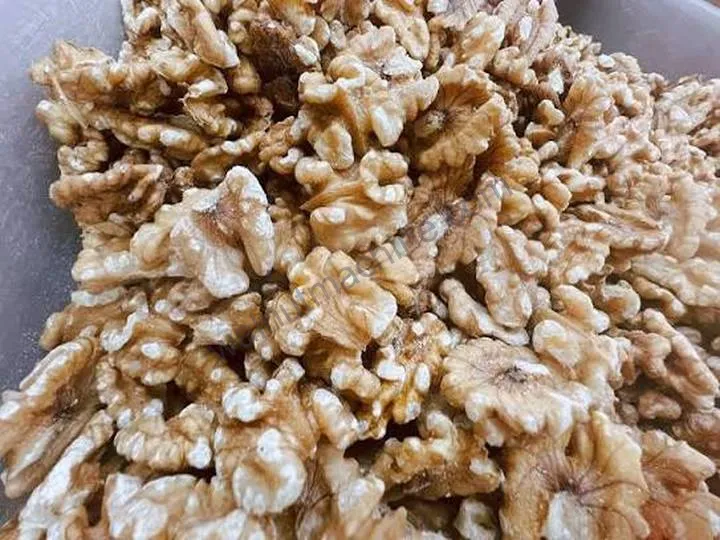
The sorting stage helps improve the consistency of the finished product before subsequent processing, packaging, or sale.
Key Features of Our Walnut Processing Plant
Size-Based Shelling
The grading stage separates walnuts by size before shelling. This allows the shelling process to be adjusted for different raw material dimensions.
Flexible Shelling Machine Configuration
The number of peanut shelling machines does not have to be fixed. Three or four units can be considered according to the required throughput, walnut sizes, and processing test results.
Separate Kernel and Shell Outlets
The kernel-shell separation section directs the two materials to different outlets, making collection and subsequent handling more convenient.
Multiple Cleaning and Sorting Stages
The destoner, screening machine, and final sorting conveyor serve different purposes. Together, they help remove heavy impurities, residual shell fragments, and defective kernels.
Green Walnut Peeling Machine for Fresh Walnuts
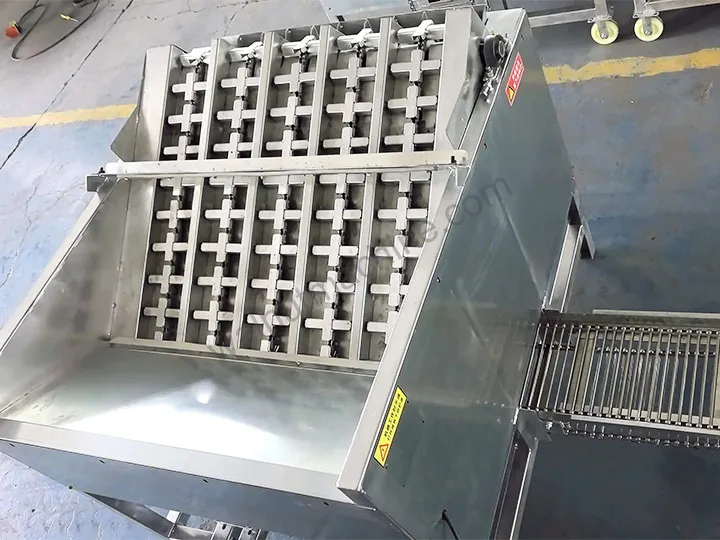
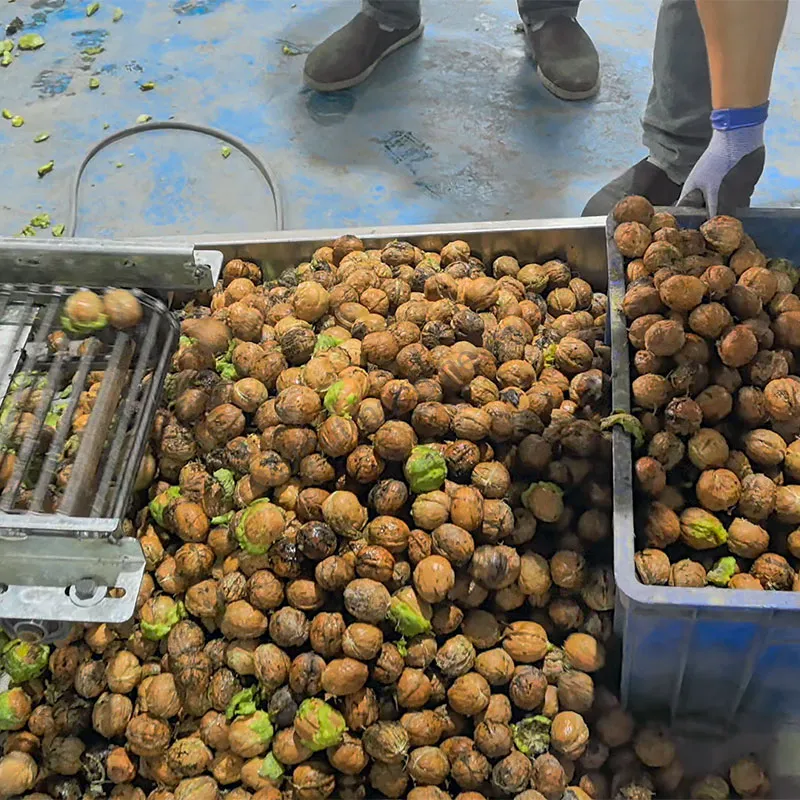
If your raw materials are fresh walnuts that still have their green husks, we also provide a green walnut peeling machine to remove the outer green husks before shelling. You can choose the appropriate equipment according to your raw material condition and processing requirements.
How to Choose a Suitable Walnut Processing Plant
Before selecting a walnut processing plant, consider the following factors.
- Raw walnut size: The size range affects grading settings and shelling gap adjustments.
- Target processing capacity: The number of shelling machines should match the required hourly throughput.
- Kernel integrity: Shelling settings should be tested to balance shell removal and kernel protection.
- Separation requirements: The separation and screening stages should match the amount of shells and other impurities in the material.
- Factory layout: Check the dimensions and arrangement of the equipment before installation.
Providing raw walnut samples, size information, and your target capacity helps us recommend a more suitable configuration.