
Peanut Shelling Machine for Efficient Peanut Shell Removal
A peanut shelling machine is designed to separate peanut kernels…
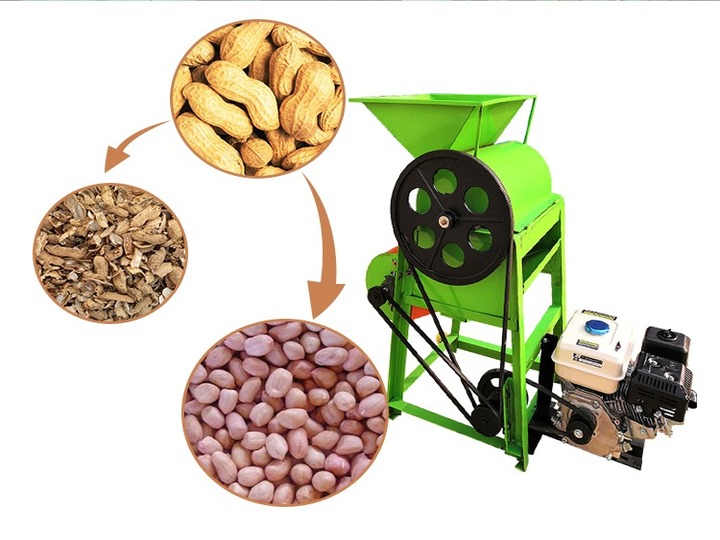
A peanut shelling machine is designed to separate peanut kernels from their shells through mechanical shelling, airflow separation, and screening. It helps peanut processors reduce manual shelling work and improve processing efficiency. Our peanut shelling equipment is available in different models to accommodate different processing capacities, peanut sizes, and power supply conditions.
Whether you operate a small peanut processing business, a grain storage facility, an oil processing plant, or a food processing factory, we can help you select a suitable machine according to your production requirements.
How Does a Peanut Shelling Machine Work?
Our Peanut Shelling Machine uses a suspension-type shelling structure combined with airflow separation and gravity screening. The process separates peanut kernels from shells and helps remove unshelled peanuts for further processing.
The working process includes the following steps:
- Feeding: Peanuts are fed into the machine through the feeding hopper and enter the front shelling drum.
- Shelling: The rotating shelling components work with the concave screen to loosen and remove the peanut shells.
- Airflow separation: The mixture passes through an air channel, where airflow carries away the lighter peanut shells.
- Gravity screening: Peanut kernels and unshelled pods enter the separation screen. The kernels move toward the collection outlet, while unshelled peanuts are directed to the next shelling stage.
- Secondary shelling: Unshelled peanuts are conveyed to the rear drum for additional shelling, followed by another round of separation.
This combination of shelling and separation helps improve processing efficiency while reducing the amount of manual handling required. The separated peanut kernels can be collected in bags.
Peanut Shelling Machine Models and Specifications
We offer different models to meet the needs of small-scale and medium-scale peanut processing operations. Capacity, machine size, and power configuration should be considered when selecting equipment.
| Especificação | Model 200 | Model 400 | Model 800 |
| Processing capacity | 200 kg/h | 300–400 kg/h | 500–800 kg/h |
| Machine dimensions | 650 × 560 × 1000 mm | 1200 × 700 × 1400 mm | 1400 × 900 × 1600 mm |
| Gasoline engine option | 170 engine | 170F engine | 170F engine |
| Electric motor option | Available | 2.2–3 kW | 3–4 kW |
| Diesel engine option | 6 hp | 6–8 hp | 8–10 hp |
| Screen configuration | 8 mm and 10 mm screens | 3 screens for different peanut sizes | 2 screens |
Note: The Model 800 dimensions with a gasoline engine are 1400 × 950 × 1600 mm. Actual configuration and specifications should be confirmed with our sales team before ordering.
The Model 200 is suitable for customers with smaller processing requirements. The Model 400 provides a higher capacity for growing businesses, while the Model 800 is designed for customers who need to process larger quantities of peanuts.
When choosing a groundnut shelling machine, consider not only the rated capacity but also the peanut variety, pod size, moisture content, available power source, and expected daily operating hours.
What Is the Shelling Rate of the Peanut Shelling Machine
Taking the Model 800 as an example, this unit has the following performance specifications:
- Shelling rate: ≥98%
- Breakage rate: ≤2.0%
- Damage rate: ≤3.0%
- Processing capacity: 500–800 kg/h
These figures are provided for the Model 800 configuration. Actual results may vary depending on peanut variety, moisture content, pod size, and operating conditions. We recommend confirming performance requirements with our team based on your raw material.
Key Features of Our Peanut Shelling Equipment
1. Shelling and Separation in One Machine
The peanut sheller machine combines mechanical shelling with airflow and gravity separation. This helps separate peanut shells from kernels and directs unshelled peanuts back for additional processing.
2. Adjustable Screen Selection
Different peanut varieties may have different pod sizes. Our peanut shelling machine can be configured with suitable concave screens to match the peanuts being processed.
- Model 200 includes 8 mm and 10 mm screens.
- Model 400 can be configured with three screens for large, medium, and small peanuts.
- Model 800 includes two screens.
Selecting the appropriate screen helps the machine operate more effectively with the target peanut size.
3. Multiple Power Options
Depending on the model and working conditions, the machine can use an electric motor, gasoline engine, or diesel engine. This gives customers flexibility when selecting equipment for a processing workshop, warehouse, or location where grid electricity may be limited.
The specific power configuration should be confirmed according to the selected model.
4. Compact Structure and Convenient Operation
The equipment consists of components such as the feeding hopper, shelling drums, screen box, fans, discharge trough, and conveying mechanism. Its compact structure makes it suitable for different peanut processing setups, while routine cleaning and maintenance help keep the machine operating reliably.
Applications of the Peanut Shelling Machine
A automatic peanut sheller can be used in a variety of peanut processing settings, including:
- Small peanut processing businesses: For shelling peanuts before selling kernels or carrying out further processing.
- Grain storage facilities: For processing batches of peanuts during storage preparation or distribution.
- Oil processing plants: For preparing peanut kernels for subsequent oil extraction processes.
- Fábricas de processamento de alimentos: For supplying shelled peanuts for roasting, grinding, and other food production applications.
The appropriate model depends on the amount of raw peanuts to be processed and the required working schedule.
How to Choose the Right Peanut Shelling Machine
Before purchasing a peanut sheller, consider the following questions:
- What is your required capacity? Choose a model based on your hourly processing target.
- What size are your peanuts? Screen selection should match the size of the peanut pods.
- What power source is available? Tell us whether you prefer an electric motor, gasoline engine, or diesel engine.
- What is the moisture content of your peanuts? The recommended moisture content of peanuts should be greater than 7% and less than 10%.
- What are your kernel quality requirements? If breakage and damage rates are important, share your target standards so we can discuss a suitable configuration.
Providing this information allows us to recommend a machine based on your actual production needs rather than capacity alone.
Complete Your Peanut Processing Line with Additional Equipment
In addition to our groundnut shelling machine, we also provide a range of peanut processing equipment for further processing after shelling. Depending on your final product requirements, you can choose a peanut peeling machine to remove the red skin, a máquina de torrar amendoim for roasting, a peanut slicing machine for producing peanut slices, a peanut chopping machine for making chopped peanut pieces or granules, and a peanut butter machine for grinding peanuts into smooth peanut paste.
These machines can be used individually or combined according to your production needs. Whether you plan to produce peeled peanuts, roasted peanuts, peanut slices, chopped peanuts, or peanut butter, we can help you select suitable equipment to build a processing solution that fits your business.
Get a Suitable Peanut Shelling Machine for Your Business
Our peanut shelling machine range includes models with different capacities, screen configurations, and power options. Whether you need a compact machine for a small processing operation or a higher-capacity model for commercial production, we can help you compare the available options.
Contact us with your required capacity, peanut pod size, moisture content, and preferred power source. Our team will help you select a suitable peanut shelling solution for your business.